01 — POSITION
Ride, mapped.
Follow your route with GPS traces and a speed profile that smooths the noise without losing the shape of the ride.
VELOCITY TRACE00:42:18
A focused telemetry cockpit for the roads you ride. Capture speed, route, acceleration and braking with the phone already in your pocket.
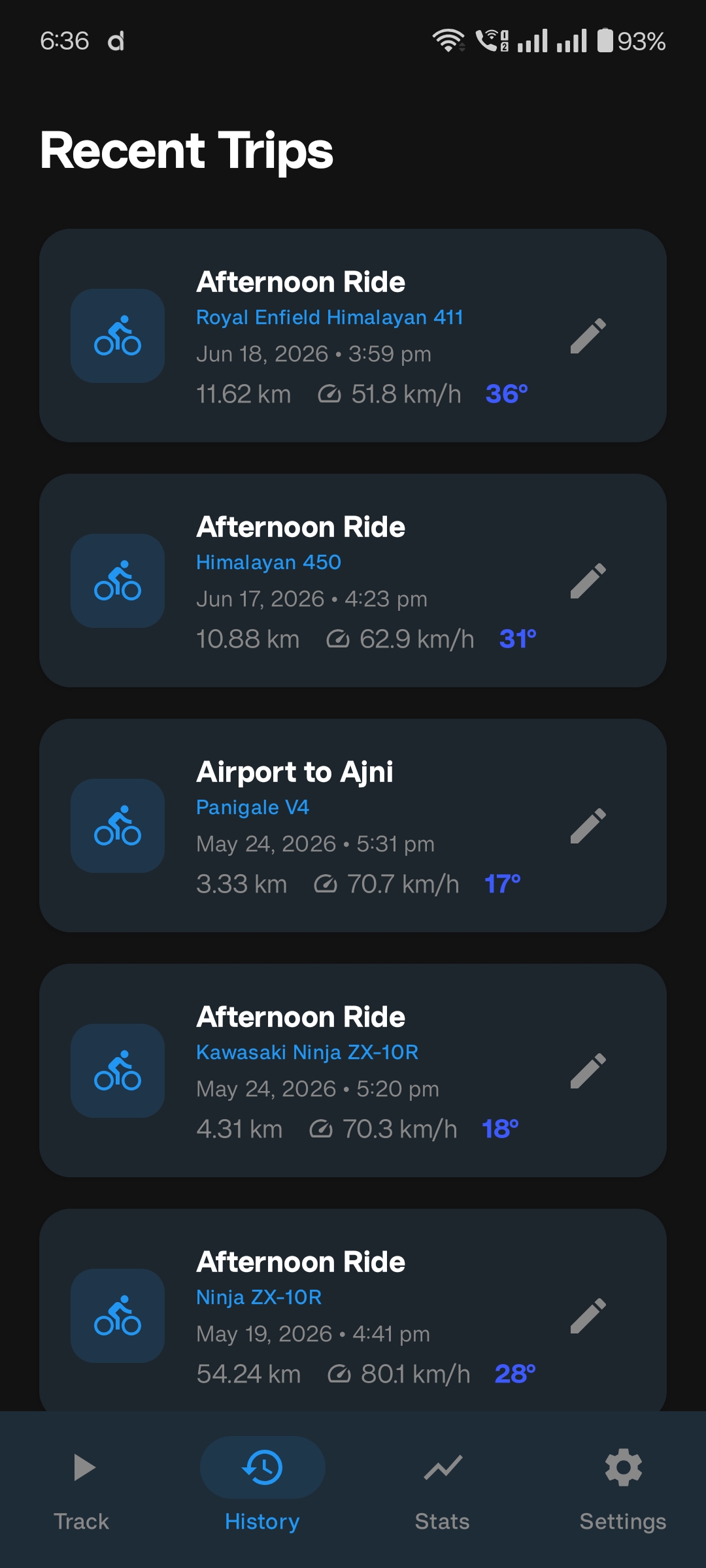
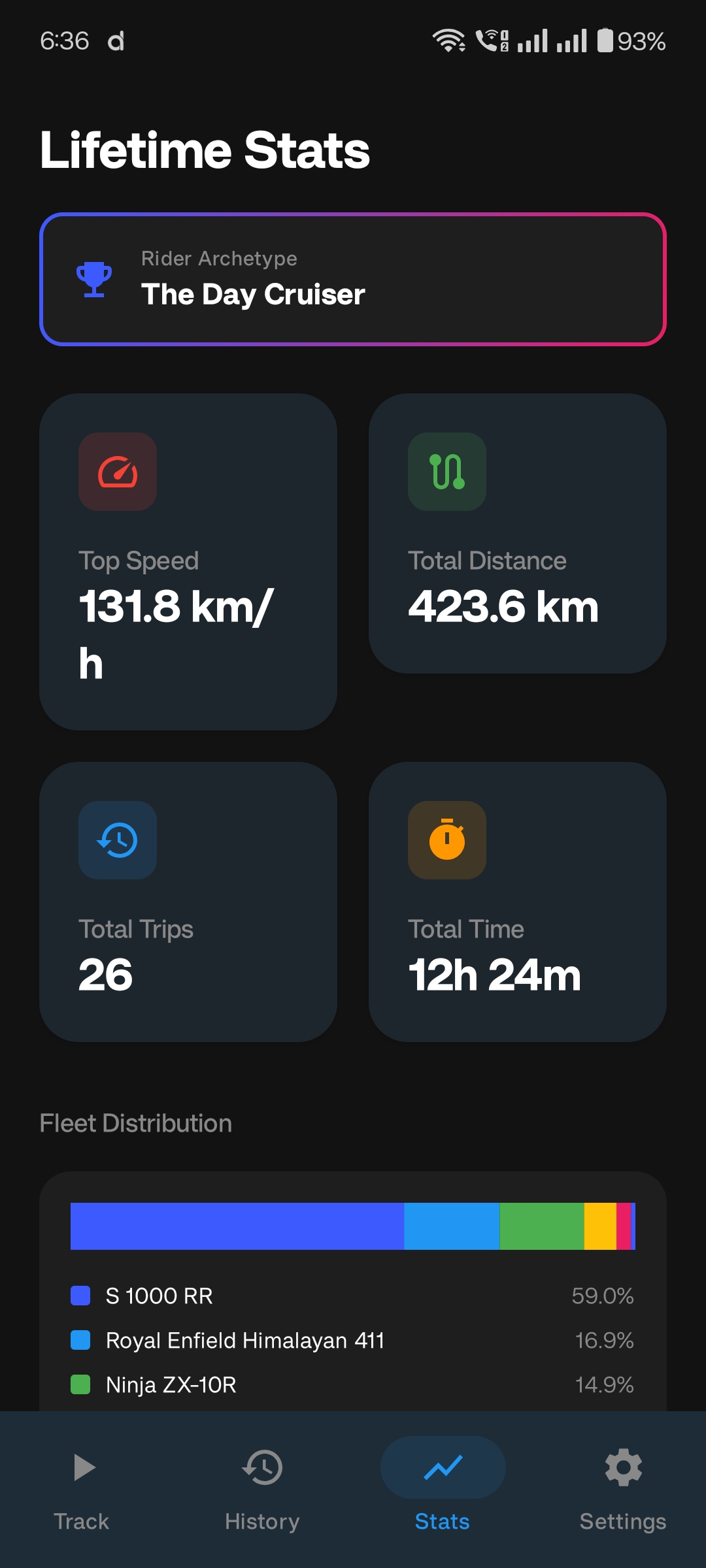
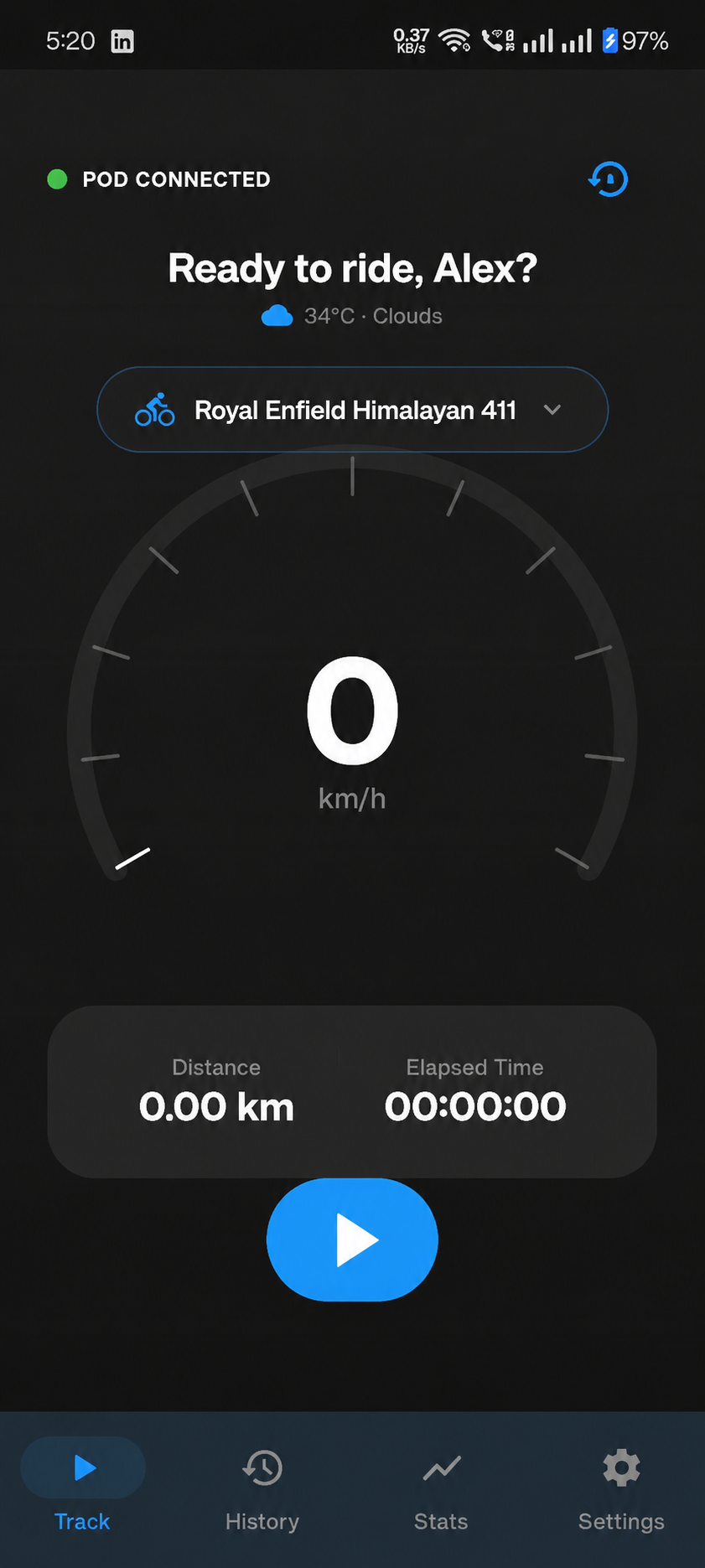
Turn a phone into a clear view of your ride. Record first; make sense of the details after you park.
Follow your route with GPS traces and a speed profile that smooths the noise without losing the shape of the ride.
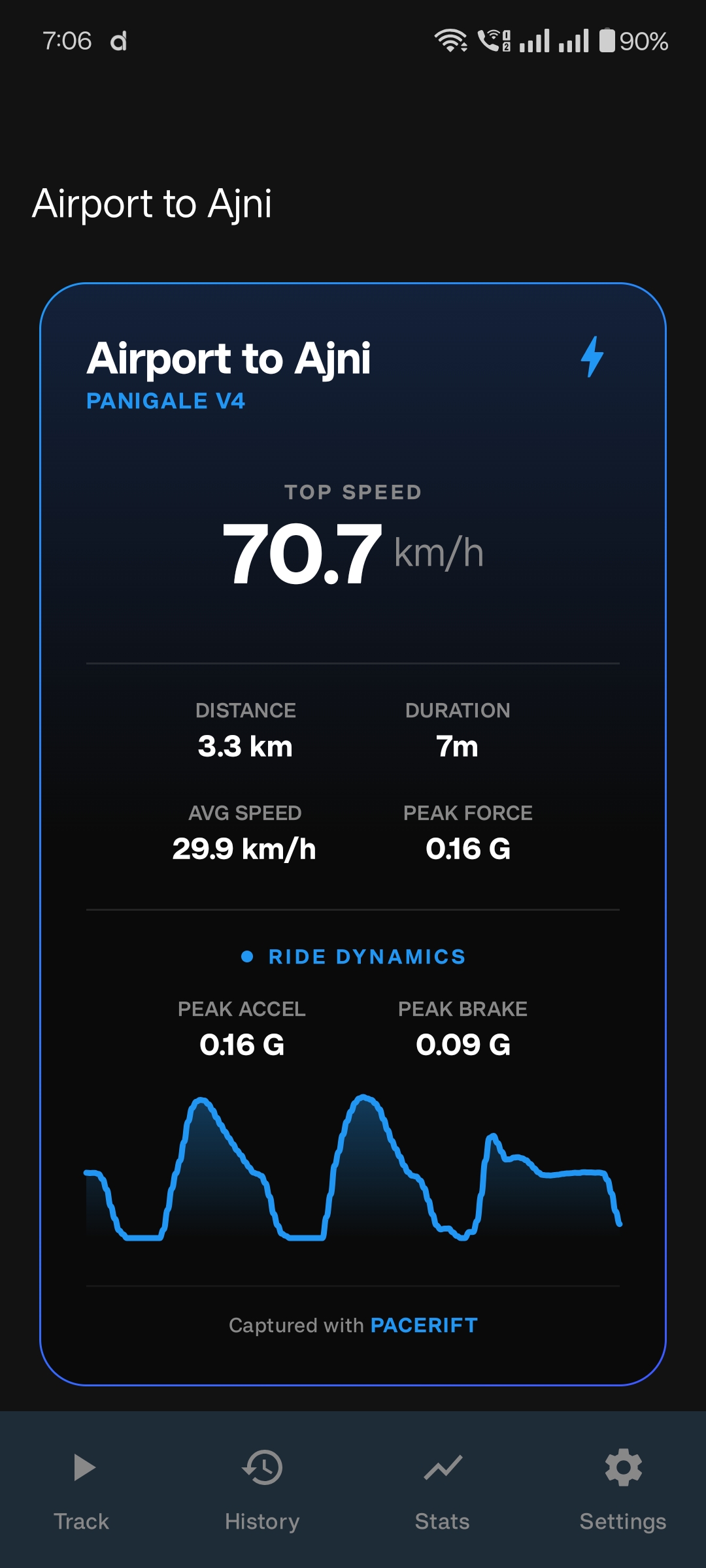
Review acceleration, braking load and peak G after every session.
See how your pace, smoothness and ride patterns shape your own profile.
Choose from a garage of 4,000+ motorcycle specifications, or add a custom build.
Browse the garage ↗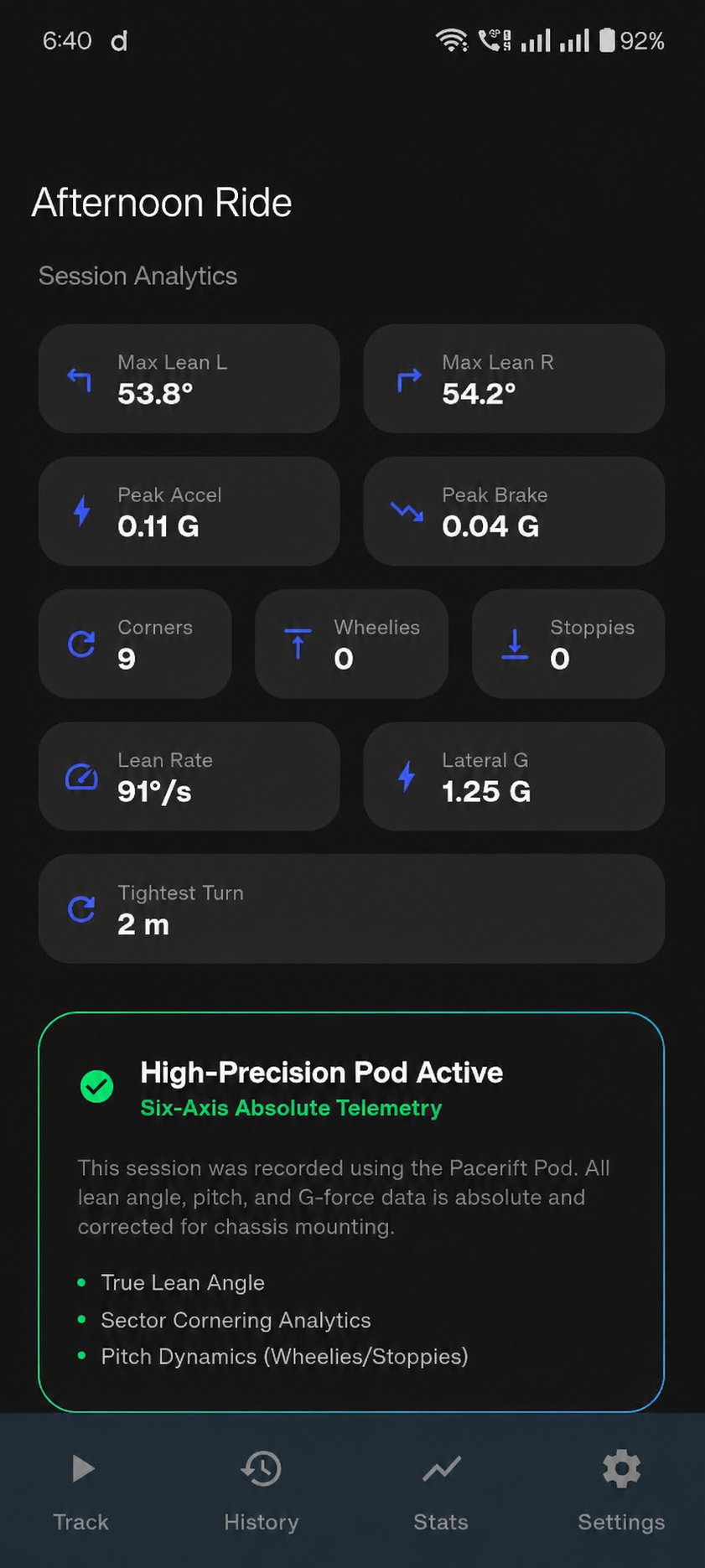
Real Pacerift app screens, shown at their original tall phone proportions. Swipe through on mobile.
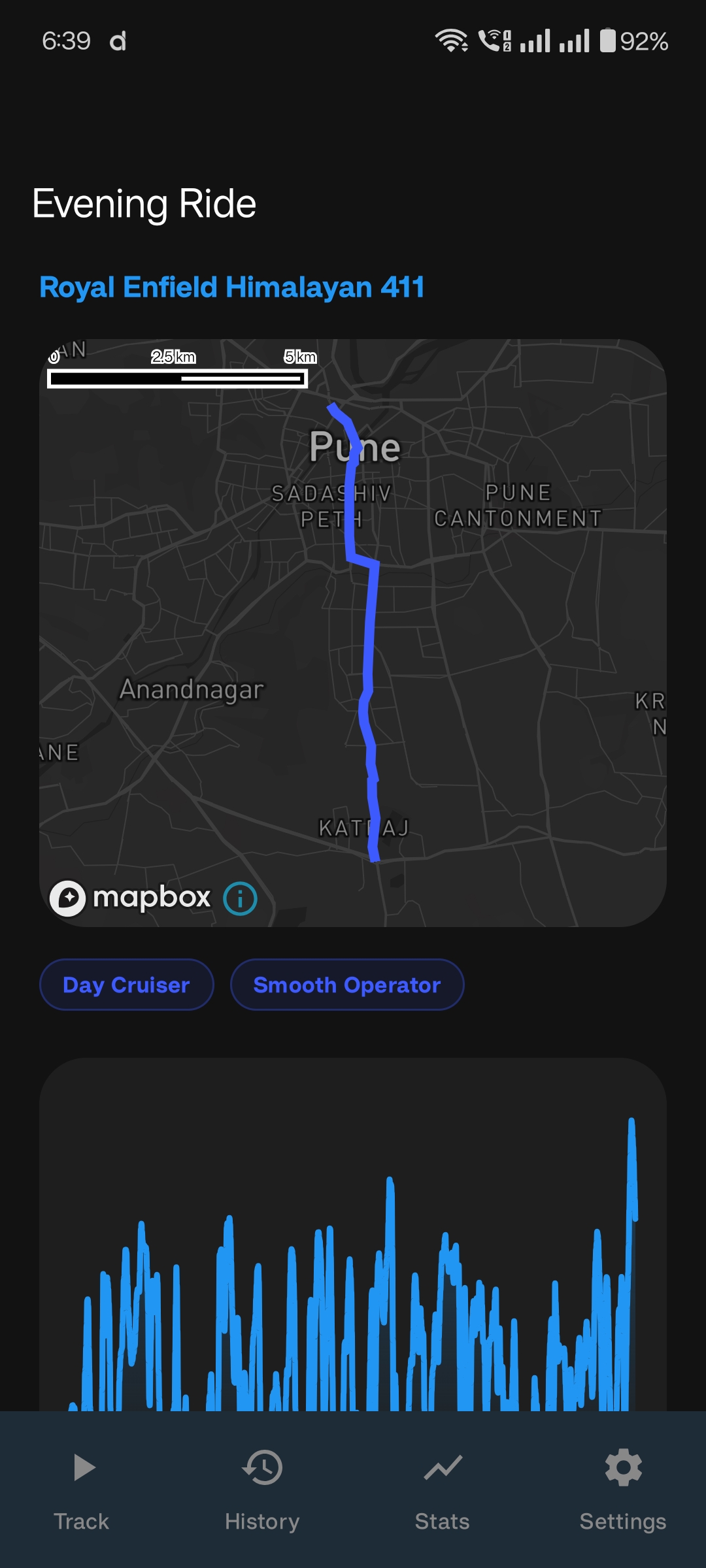
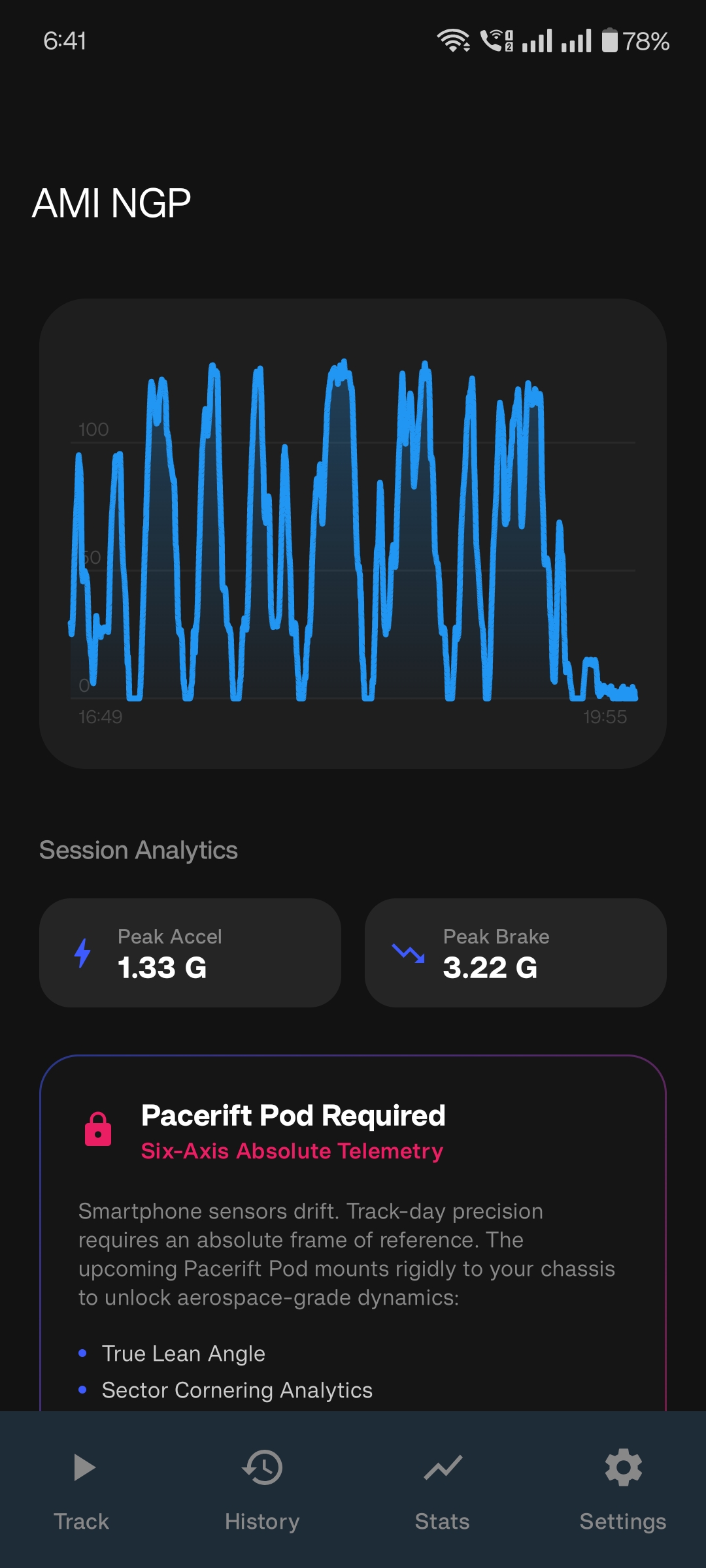
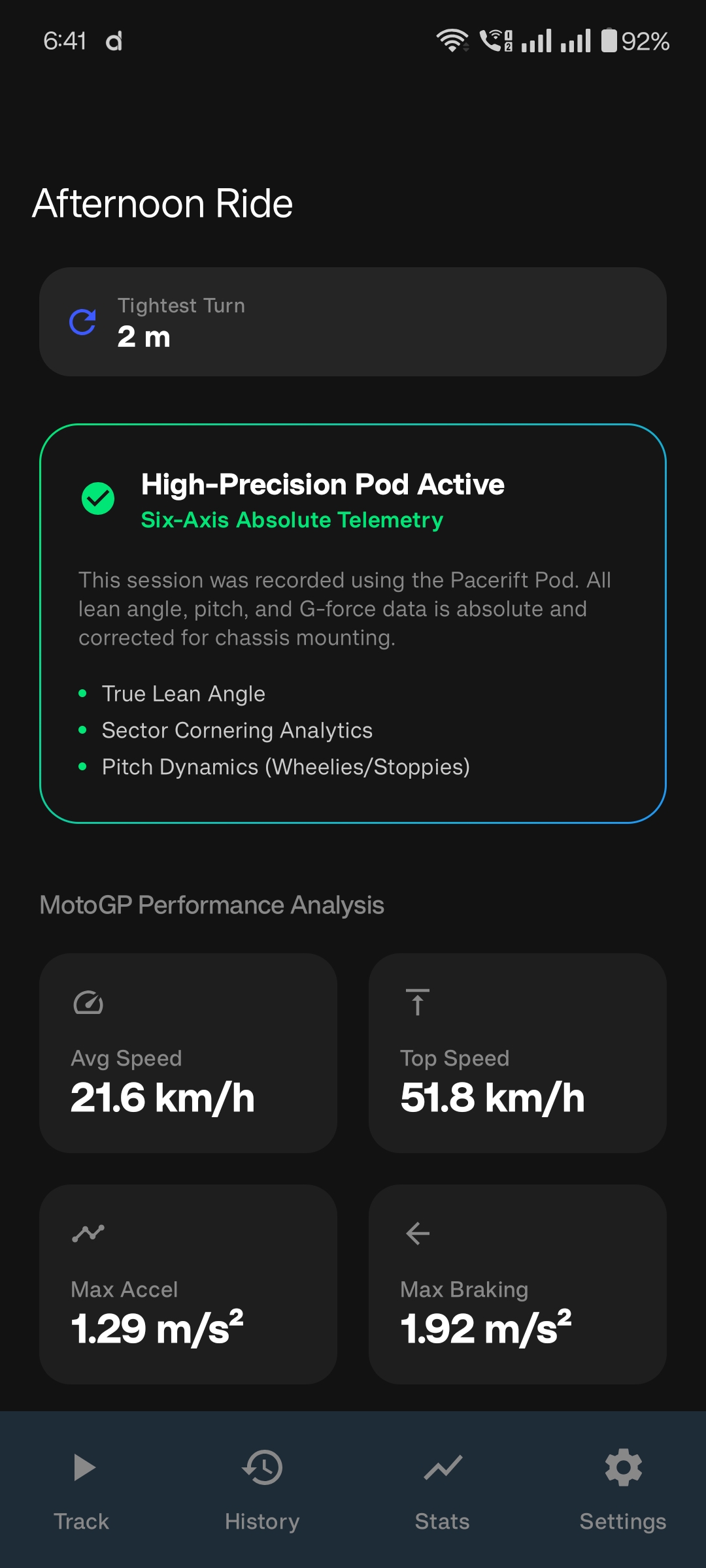
These are public rider reviews, shown with their names and dates. See the current rating and more feedback on Google Play.
View Pacerift on Google Play ↗“Best app for tracking and breaking my own records! The interface is super clean, and the features are genuinely useful. I haven’t seen an application like this before. Highly recommended!👌🏻”Shubhangi Sharma
“Finally, a motorcycle tracking app built for riders. Accurate ride stats, beautiful share cards, and a great way to keep a record of every journey. Simple, reliable, and genuinely useful.”Yash Chaudhari
Phone sensors are imperfect. Pacerift processes GPS and inertial motion on-device to make the useful signal easier to read.
Location, acceleration and rotation arrive as time-stamped sensor samples.
Robust outlier checks help prevent isolated bumps from dominating a ride summary.
Orientation-aware processing estimates useful linear motion in the phone reference frame.
Inspect speed, route and force trends after the session, even when recording offline.
Find your motorcycle in a broad factory-spec catalog spanning sport, naked, touring, cruiser and adventure categories. Your ride data stays tied to your machine.
See how speed and corner radius shape lateral acceleration and an idealized lean estimate. Adjust either control; the readout updates instantly.
Open the full Telemetry Lab ↗Ideal coordinated-turn model only. Not measured vehicle data or a riding recommendation.
The phone app tracks linear acceleration and GPS speed through custom low-pass filtering. The optional chassis-mounted Pod takes vehicle dynamics further: a hard-mounted 6-axis IMU and edge firmware decouple chassis motion from phone vibration, targeting more accurate lean measurement and sector-by-sector braking analytics over BLE.
Get product updates about the Pacerift Compact Pod.
OPTIONAL HARDWARE · APP WORKS ON ITS OWNRide recording is designed to work offline. GPS and device sensors provide the core ride data; an internet connection is not required to record a session.
Pacerift is free to use, with no subscription paywall and no display advertising.
A phone can estimate motion, but a handset is not a chassis reference. Vibration, mounting and centripetal acceleration limit reliable absolute lean measurement. The hard-mounted Pacerift Compact Pod is designed for direct chassis sensing.
Pacerift is built around on-device ride recording and local data privacy. No cloud account is required to start recording.
Engineering notes for riders who want to understand how GPS and inertial signals become a readable ride profile. These are processing concepts, not a claim that a phone replaces calibrated chassis-mounted motorsport instrumentation.
A low-pass Butterworth response attenuates high-frequency noise while retaining the ride-scale motion that matters. For order n and cutoff fc, the squared magnitude response is:
|H(jω)|² = 1 / (1 + (ω / ωc)2n)Cutoff selection trades noise rejection against transient response. Filtering should preserve acceleration and braking events rather than over-smooth them.
For samples in a local window, compute the median m and median absolute deviation (MAD). Flag an outlier when:
|xᵢ − m| > k · 1.4826 · MADThe scale factor makes MAD comparable to standard deviation for normally distributed noise. A flagged sample can be replaced with the window median or marked for downstream handling.
Orientation quaternions rotate measured acceleration from device coordinates into a chosen reference frame:
aworld = q ⊗ adevice ⊗ q⁻¹Gravity compensation and axis alignment help estimate linear acceleration. Orientation drift and phone placement remain sources of uncertainty.
Longitudinal acceleration is estimated from velocity change over time. For a turn at speed v and radius r, lateral acceleration is:
alat = v² / r G = a / 9.80665 m·s⁻²An ideal coordinated-turn lean estimate follows tan(θ) = v²/(r·g). Phone-only estimates are affected by mounting, vibration, road camber, tire dynamics and sensor drift.
PHONE SENSORS SUPPORT RIDE ANALYSIS · THE OPTIONAL PACERIFT POD IS DESIGNED TO ADD DIRECT CHASSIS MEASUREMENT
FREE · OFFLINE READY · ANDROID
Open the Google Play listing on your Android phone.
PACERIFT / GOOGLE PLAYOpen Google Play ↗